
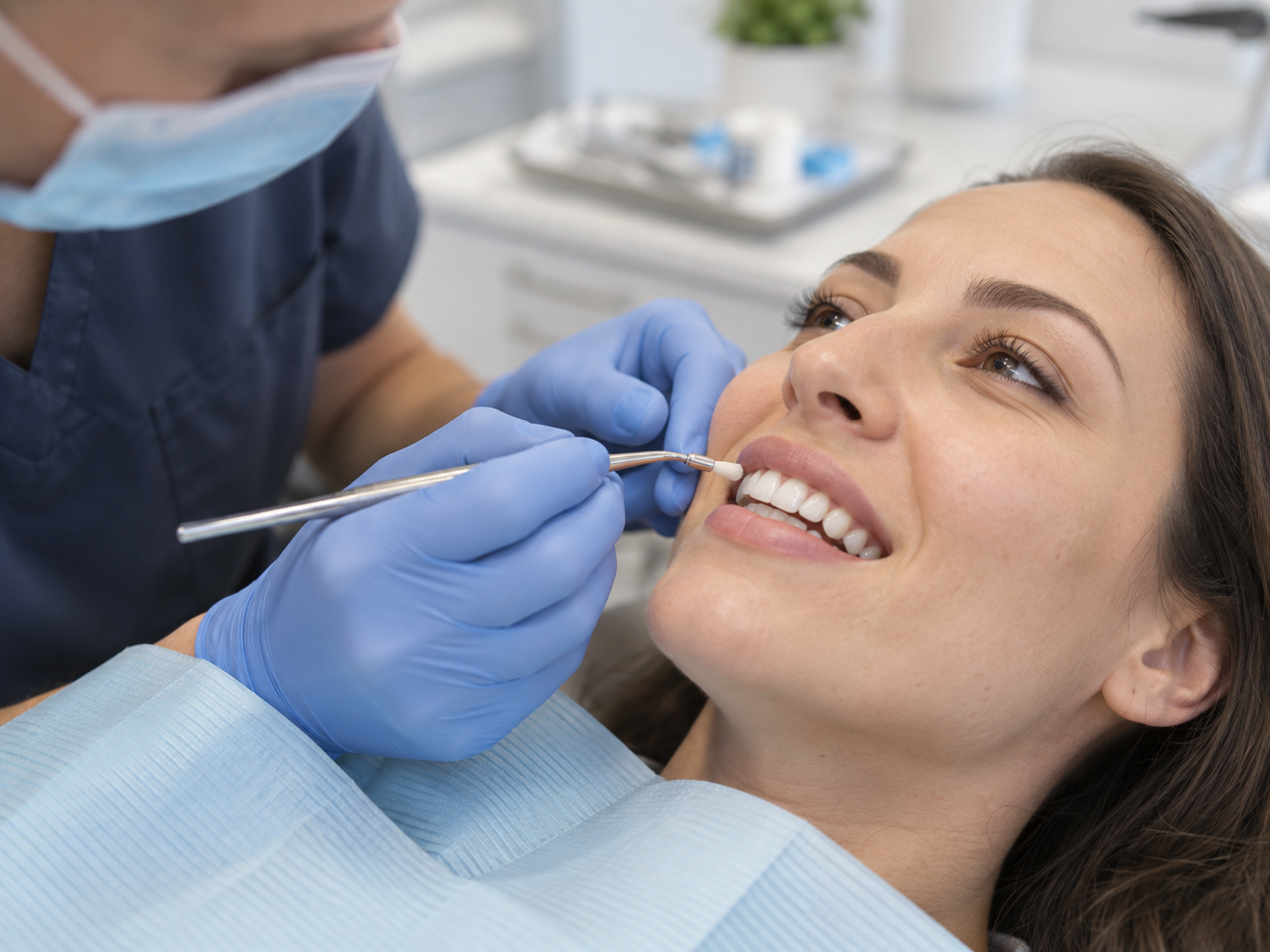
Dental Bonding in Beverly, Chicago
A small chip, a gap between your front teeth or one stubborn stain can make you hide your smile. Dental bonding fixes these flaws by shaping a tooth-colored resin right onto your tooth, then hardening it with a special light for a smooth, natural look.
At More Smiles of Beverly, Dr. Ademola Adekola Jr. matches the resin to your natural shade and sculpts it by hand, so the repair blends right in. Most bonding is finished in a single visit, with little or no change to your natural enamel.
A Quick, Conservative Smile Fix
Bonding is one of the simplest ways to improve your smile. There are no lab molds for most cases and no waiting for a custom restoration.
Usually One Visit
Most teeth are bonded in about 30 to 60 minutes per tooth.
Little to No Drilling
Your natural enamel is preserved, and numbing is often not needed.
Seamless Color Match
Resin is shaded to blend with your natural teeth.
Easy to Repair
Bonding can be touched up or updated later as your smile changes.
What Dental Bonding Can Fix
Bonding is ideal for small cosmetic and minor structural problems, such as:
- Chipped or cracked edges on front teeth
- Small gaps between teeth
- Stains or spots that whitening cannot lift
- Uneven or short teeth that need reshaping or length
- Worn edges from grinding or age
- Exposed roots from gum recession that cause sensitivity
Good to know: bonding cannot be whitened later. If you want a brighter smile overall, we usually recommend teeth whitening first, then match the bonding to your new shade.
How Dental Bonding Is Done
Bonding is quick and comfortable. Here is what happens in the chair.
Shade Selection
We match the resin color to your natural teeth using a shade guide.
Surface Prep
The tooth surface is lightly roughened and a conditioning liquid helps the resin stick.
Sculpting
Putty-like resin is applied and shaped by hand to fix the chip, gap or stain.
Curing
A bright blue light hardens each layer of resin in seconds.
Polish
We trim, shape and polish the bonding to match the shine of your enamel.
Fix the Chip. Close the Gap. Keep Your Natural Teeth.
A confident smile, often in a single visit to our Beverly office.
Book an AppointmentBonding vs. Other Smile Fixes
Bonding is not the only way to improve a smile. Here is how it compares, so you can choose with confidence.
Dental Bonding
- VisitsUsually one
- Enamel removedLittle to none
- Typical life3 to 10 years
- Best forSmall chips, gaps, spots
Porcelain Veneers
- VisitsTwo or more
- Enamel removedThin layer
- Typical life10 to 15+ years
- Best forFull smile makeovers
Dental Crowns
- VisitsUsually two
- CoversThe whole tooth
- Typical lifeMany years
- Best forLarge breaks or weak teeth
Teeth Whitening
- VisitsOne or at home
- ChangesColor of natural teeth
- Shape fixNo
- Best forOverall brightness
Making Your Bonding Last
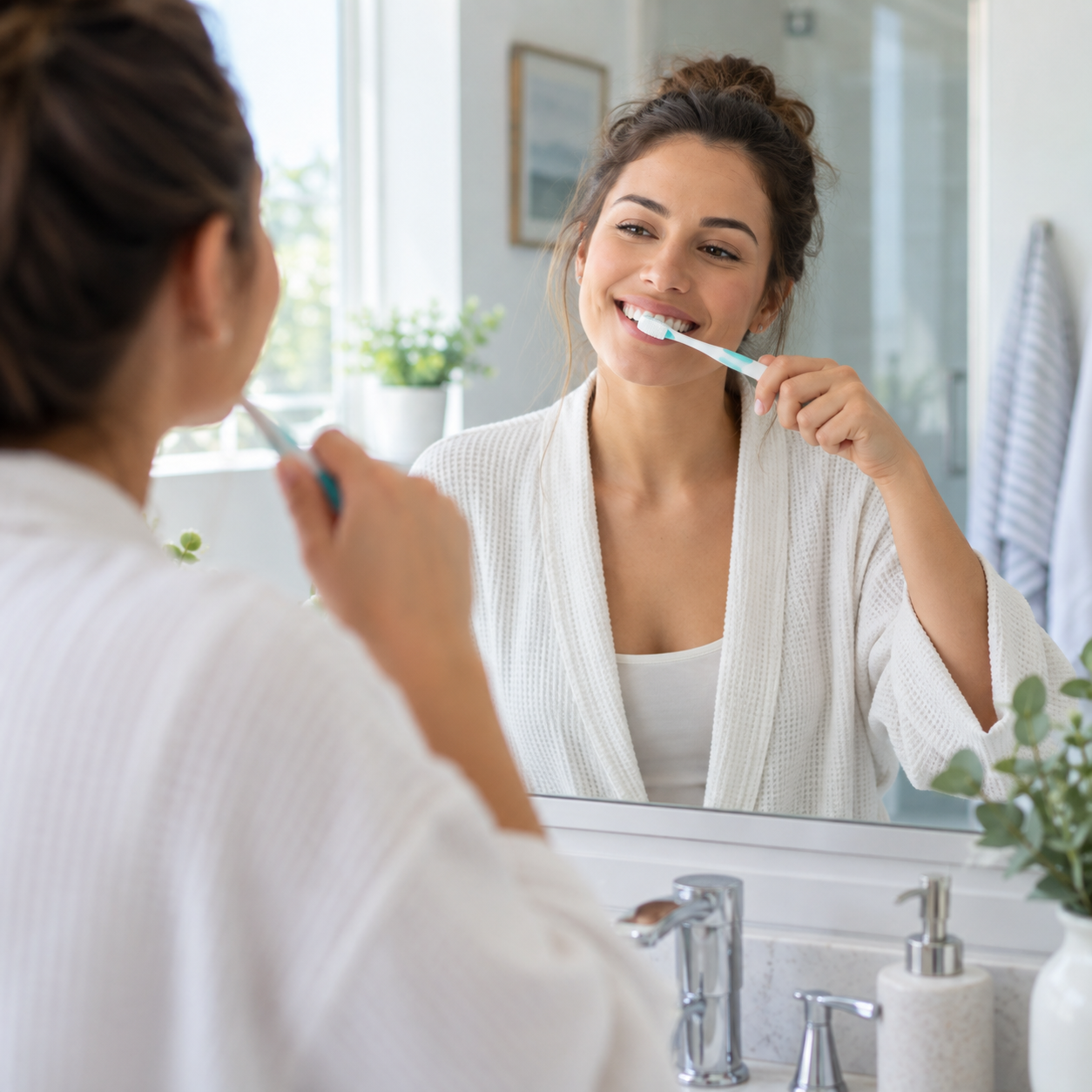
Bonding is strong for everyday use, and a few habits help it stay smooth and bright for years:
Limit staining drinks
Coffee, tea and red wine can stain resin over time. Rinse after.
Skip hard habits
Avoid biting nails, pens or ice, which can chip the edges.
Wear a night guard
If you grind your teeth, a guard protects your bonding while you sleep.
Keep regular cleanings
Professional polishing keeps bonding shiny and catches wear early.

Dr. Ademola J. Adekola Jr., DDS
A graduate of the University of Illinois at Chicago College of Dentistry with a focus on cosmetic dentistry, Dr. Adekola sculpts every bonding repair to blend naturally with your smile.
Dental Bonding FAQ
How long does dental bonding last?
Dental bonding typically lasts 3 to 10 years before it needs a touch-up. Front teeth that take less bite force often keep bonding longer. Avoiding hard habits, limiting staining drinks and keeping regular cleanings all help it last.
Is dental bonding a good idea?
Bonding is a great choice for small chips, gaps and spots when you want a fast, conservative fix. It preserves your natural enamel and is usually done in one visit. For larger damage or a full makeover, veneers or crowns may be a better long-term option.
Is bonding better than veneers?
Neither is better for everyone. Bonding is quicker, preserves more enamel and suits smaller fixes. Porcelain veneers last longer, resist stains better and suit bigger changes to color and shape. Dr. Adekola will help you decide based on your goals.
Does dental bonding hurt?
Usually not. Bonding requires little to no removal of enamel, so most patients do not need numbing at all. You may feel mild sensitivity for a day or two afterward.
Can bonded teeth be whitened?
No. Whitening gel does not change the color of bonding resin. If you want a brighter smile, whiten your natural teeth first, then we match the bonding to your new shade.
Does bonding stain?
Bonding resin can pick up stains over time from coffee, tea, red wine and tobacco. Rinsing after dark drinks and keeping regular cleanings with polishing helps it stay bright.
How many teeth can be bonded?
Anywhere from one tooth to several. One or two teeth are common for a single chip or gap, while 4 to 8 upper front teeth may be bonded for a more balanced smile.
How much does dental bonding cost?
Every treatment plan is quoted after an exam, because the cost depends on how many teeth are treated and how much reshaping each one needs. Our team will review your options with you first. Contact us for a quote.
Dental Bonding Near You in the Southwest Side and Suburbs
Our office at 2407 W 104th St sits in the heart of Beverly, an easy drive for families across Chicago's Southwest Side and the nearby south suburbs.
Chipped or Gapped Tooth? We Can Help.
Mon to Fri, 9:00 a.m. to 4:30 p.m. at 2407 W 104th St, Chicago, IL 60655