
Crowns and Bridgeworks
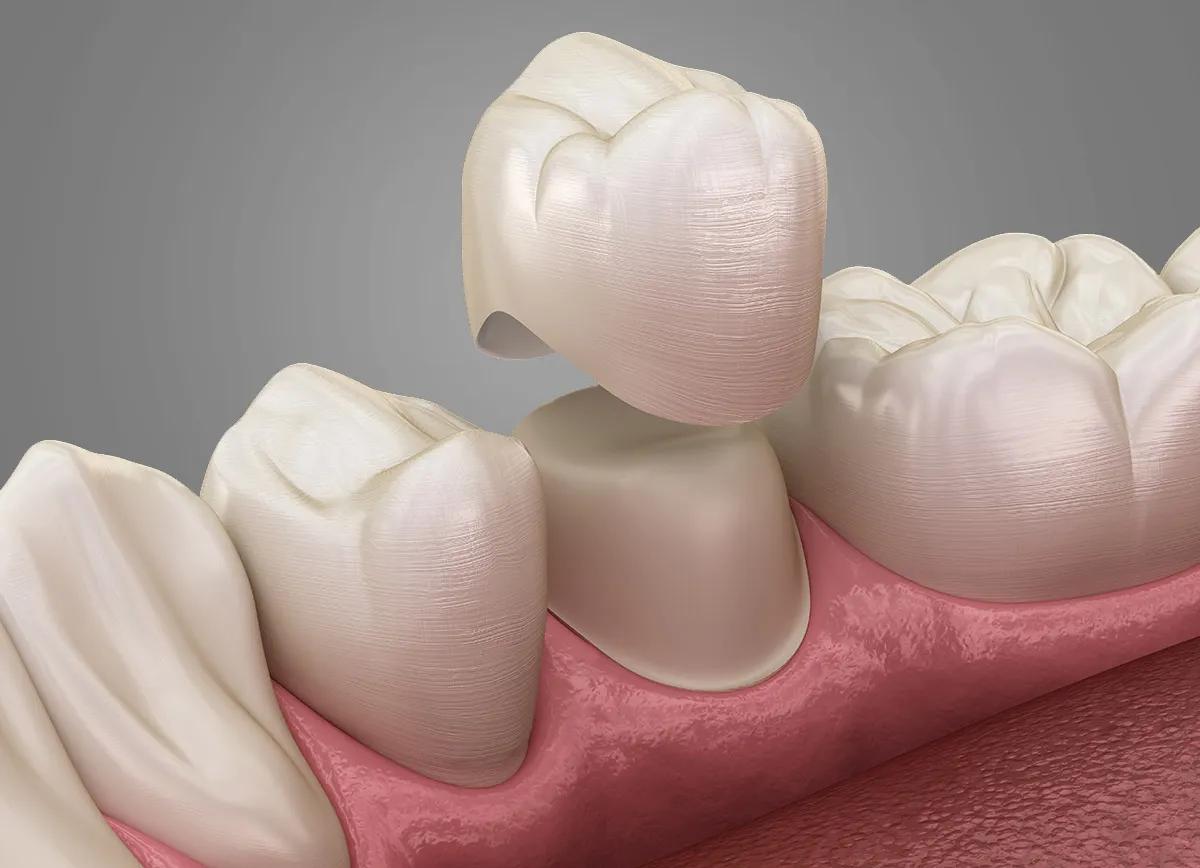
Use the following questions to determine if Crowns and Bridgeworks might be the right solution for you.
Dental Crowns and Bridges Services Chicago, IL
- DO YOU WANT TO REPLACE MISSING TEETH?
- DO YOU PREFER A PERMANENT SOLUTION?
- DO YOU LIKE YOUR SMILE?
- ARE YOU READY TO COMMIT TO DAILY CLEANING AND MAINTENANCE?
- DO YOU WANT A PERMANENT ALTERNATIVE TO IMPLANTS THAT IS LESS COSTLY?
- DO YOU PREFER A NON SURGICAL APPROACH?
Dental Crowns and Bridges Services Chicago, IL
Crowning or Capping a Tooth
Crowning or capping a tooth will usually take two to three visits. At the first visit, your tooth is prepared to receive its new crown. First, it is shaped to fit inside the new covering. This will involve some drilling to give the tooth a uniform shape. The tooth and the surrounding area will be numbed beforehand. If there is very little tooth structure left to begin with, the tooth may have to be built up with filling material, rather than filed down, to support the crown.
After the tooth is prepared, impressions of your teeth are taken, either digitally or with reliable, putty-like impression materials, and sent to the dental laboratory. There, the impressions will be used to make models of your teeth for the creation of a crown. The models will serve as guides to the highly skilled lab technicians, who will ensure that your new crown is designed to enhance your smile and function well within your bite.
Before you leave the office, a temporary crown will be attached to your tooth to protect it until the permanent crown is ready. At the second visit, your permanent crown will be attached to your tooth with either a resin that hardens when exposed to a special light source, or a type of permanent cement.
Creating a Bridge
Crowns can also be used to create a lifelike replacement for a missing tooth. This is done with bridgework, which spans the space of the missing tooth and requires at least three crowns. Two of those crowns will be placed over healthy teeth on either side of the missing tooth; these healthy teeth are referred to as abutment teeth. The two crowned abutment teeth become supports for a third crown placed in between them; that third crown is referred to as a pontic. If more than one tooth is missing, more crowns will be needed to bridge the gap in between the abutment teeth.
The number of abutment teeth necessary to replace missing teeth is influenced by the number of missing teeth, the size and length of the abutment tooth roots, the amount of bone support each abutment tooth has, as well as where in the mouth the missing tooth is located. For example, if you have three missing teeth, four abutment teeth may be necessary, thereby creating a seven-tooth bridge. Engineering and designing of the bridge requires an understanding of how to replace teeth, as well as the biology of the supporting gum and bone tissue.