
Bone Grafting in Beverly, Chicago
When a tooth is lost or gum disease sets in, the jawbone underneath slowly shrinks. Without enough bone, a dental implant has nothing solid to anchor into, and your face can start to look older over time.
A dental bone graft adds bone material where it is missing, giving your jaw the height and width it needs. Dr. Ademola Adekola Jr. has completed extensive postgraduate training in bone grafting and implants, recognized by the International Dental Implant Association, so your foundation is built with care.
The Foundation for Lasting Implants
A bone graft is often the step that turns "you are not a candidate for implants" into "you are." It also protects your jaw after a tooth is removed.
Rebuilds Lost Bone
Restores the height and width your jaw needs to support an implant.
Supports Implants
A solid base helps your implant stay stable for years to come.
Preserves Your Face
Healthy jawbone helps prevent the sunken look that follows tooth loss.
Comfortable Procedure
The area is fully numbed, and recovery feels similar to a simple extraction.
When You May Need a Bone Graft
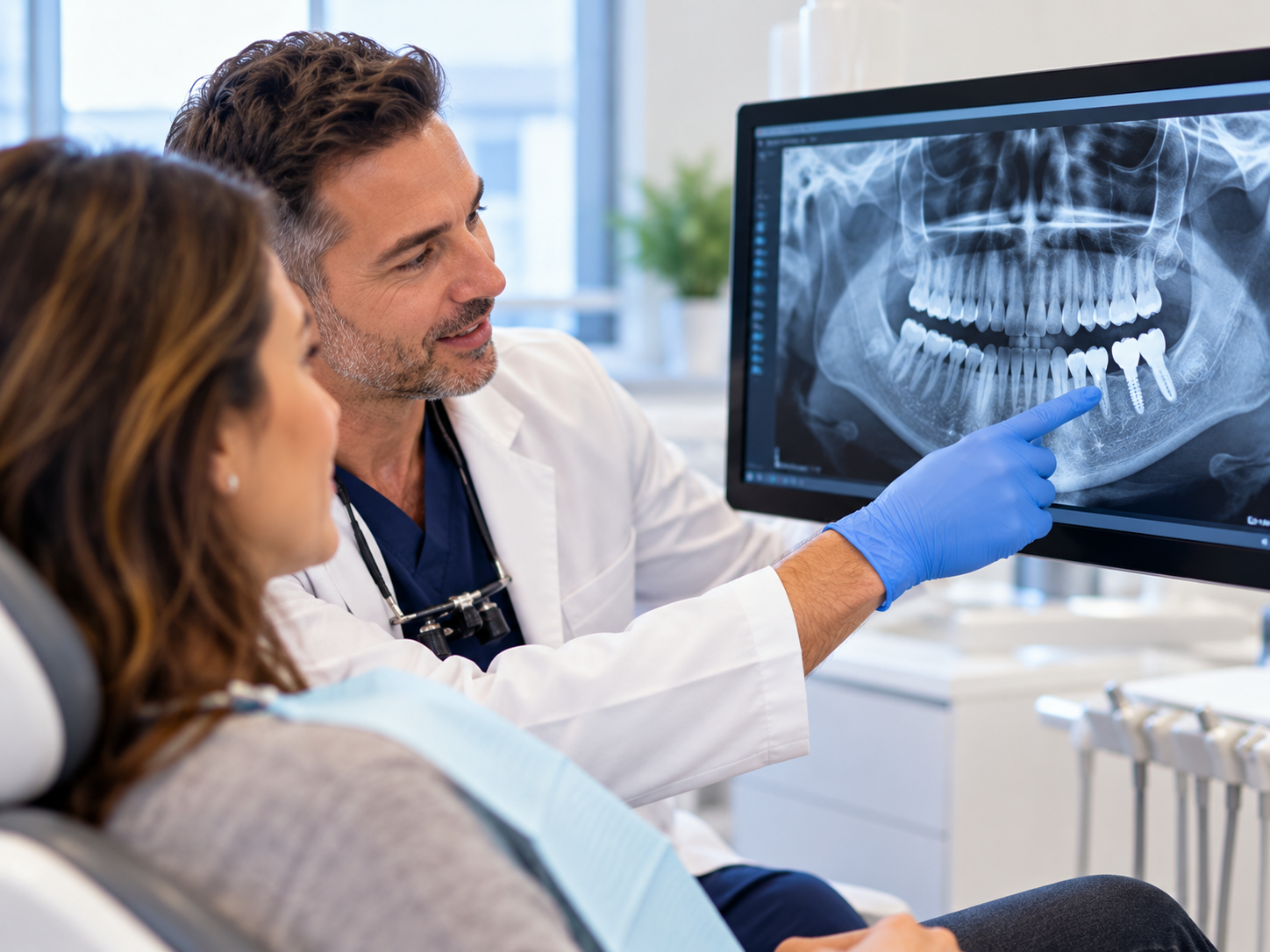
Your X-rays tell the story. A bone graft is often recommended if you have:
- A missing tooth that was lost months or years ago
- A tooth being extracted that will be replaced with an implant
- Bone loss from gum disease around your teeth
- Upper back teeth that sit close to the sinus
- A thin or narrow jaw ridge that cannot hold an implant
- Loose dentures caused by a shrinking jawbone
Good to know: the jaw begins to shrink soon after a tooth is lost. Placing a graft at the time of an extraction is often the simplest way to keep your implant options open.
How a Dental Bone Graft Is Done
Bone grafting is a minor procedure done right here in our office. Here is what to expect.
Exam and X-Rays
We measure your bone with X-rays and plan exactly where the graft is needed.
Numbing
Local anesthetic keeps the area comfortable. You feel pressure, not pain.
Placing the Graft
Bone material is placed where it is needed and protected so it can heal.
Closing the Site
The gum is closed over the graft, often with a few small stitches.
Healing and Your Implant
Over the next few months the graft fuses with your bone, ready for your implant.
A Strong Smile Starts With a Strong Foundation.
Advanced bone grafting and implant care, close to home in Beverly.
Book an AppointmentWhich Bone Graft Do You Need?
Not every graft is the same. Dr. Adekola will recommend the type that fits your jaw, your X-rays and your implant plan.
Socket Preservation
- WhenRight after an extraction
- GoalKeep the jaw from shrinking
- HealingAbout 3 to 4 months
- Best forFuture implants
Ridge Augmentation
- WhenBone has already shrunk
- GoalRestore height and width
- HealingAbout 4 to 6 months
- Best forOlder tooth loss
Sinus Lift
- WhenBone is thin under the sinus
- GoalAdd height to the upper jaw
- HealingAbout 6 to 9 months
- Best forUpper molar implants
Your Dental Implant
- WhenAfter the graft heals
- ResultA stable, natural tooth
- LifespanBuilt to last decades
- PlanMapped from day one

Healing After Your Bone Graft
Most people return to normal routines in a day or two. Protecting the graft is the key to success:
Rest for a few days
Skip heavy exercise and lifting while the site settles.
Eat soft foods
Soup, yogurt and eggs. Avoid chewing on the graft side.
Skip tobacco and straws
Both can disturb healing and raise the risk of graft failure.
Keep it clean
Rinse gently as directed and avoid brushing the site for the first day or two.

Dr. Ademola J. Adekola Jr., DDS
A graduate of the University of Illinois at Chicago College of Dentistry, Dr. Adekola has extensive postgraduate training in bone grafting and implants and is recognized by the International Dental Implant Association.
Bone Grafting FAQ
Does a dental bone graft hurt?
The procedure itself should not hurt because the area is fully numbed. Afterward, most people have mild soreness and some swelling for a few days, often compared to a simple tooth extraction. Over-the-counter pain relievers and cold compresses usually keep you comfortable.
How long does a bone graft take to heal?
The gum heals over the graft in about one to two weeks. The bone itself takes about three to nine months to fully fuse, depending on the type and size of the graft. Socket preservation grafts tend to heal fastest.
How long after a bone graft can I get an implant?
Most implants are placed three to nine months after a bone graft, once the new bone is strong enough. In some cases, a small graft and the implant can be placed at the same visit. Dr. Adekola will tell you which approach fits your case.
Why do I need a bone graft for an implant?
An implant needs enough healthy bone around it to stay stable. After a tooth is lost or gum disease damages the jaw, the bone often becomes too thin or short. A graft rebuilds that support so the implant can last.
Where does the bone graft material come from?
Grafts can use your own bone, donor bone from a tissue bank, specially treated animal bone or a synthetic material. All are safe and well studied. We will explain the material we recommend for you.
What should I avoid after a bone graft?
For the first few days, avoid smoking, using straws, spitting forcefully, heavy exercise and chewing on the graft side. These can disturb the site while it heals. Stick to soft foods and follow your aftercare instructions.
Do bone grafts fail?
Most dental bone grafts heal successfully. The biggest risks are smoking, infection and pressure on the site while it heals. Following your aftercare instructions closely gives your graft the best chance of success.
How much does a bone graft cost?
Every treatment plan is quoted after an exam, because the cost depends on the type of graft, the material used and how many areas need it. We accept all PPO plans and offer payment plans. Contact us for a quote.
Bone Grafting Near You in the Southwest Side and Suburbs
Our office at 2407 W 104th St sits in the heart of Beverly, an easy drive for families across Chicago's Southwest Side and the nearby south suburbs.
Told You Do Not Have Enough Bone for Implants? Let's Talk.
Mon to Fri, 9:00 a.m. to 4:30 p.m. at 2407 W 104th St, Chicago, IL 60655