
Dental Implant vs. Dental Bridge: Which Is Better for Replacing a Missing Tooth?
Both options can restore your smile, but understanding how they differ can help you make a more confident decision about replacing a missing tooth.
Losing a tooth can affect much more than the appearance of your smile. Depending on its location, a missing tooth may make chewing uncomfortable, affect your bite, or allow neighboring teeth to gradually shift.
Fortunately, you do not have to simply live with the gap.
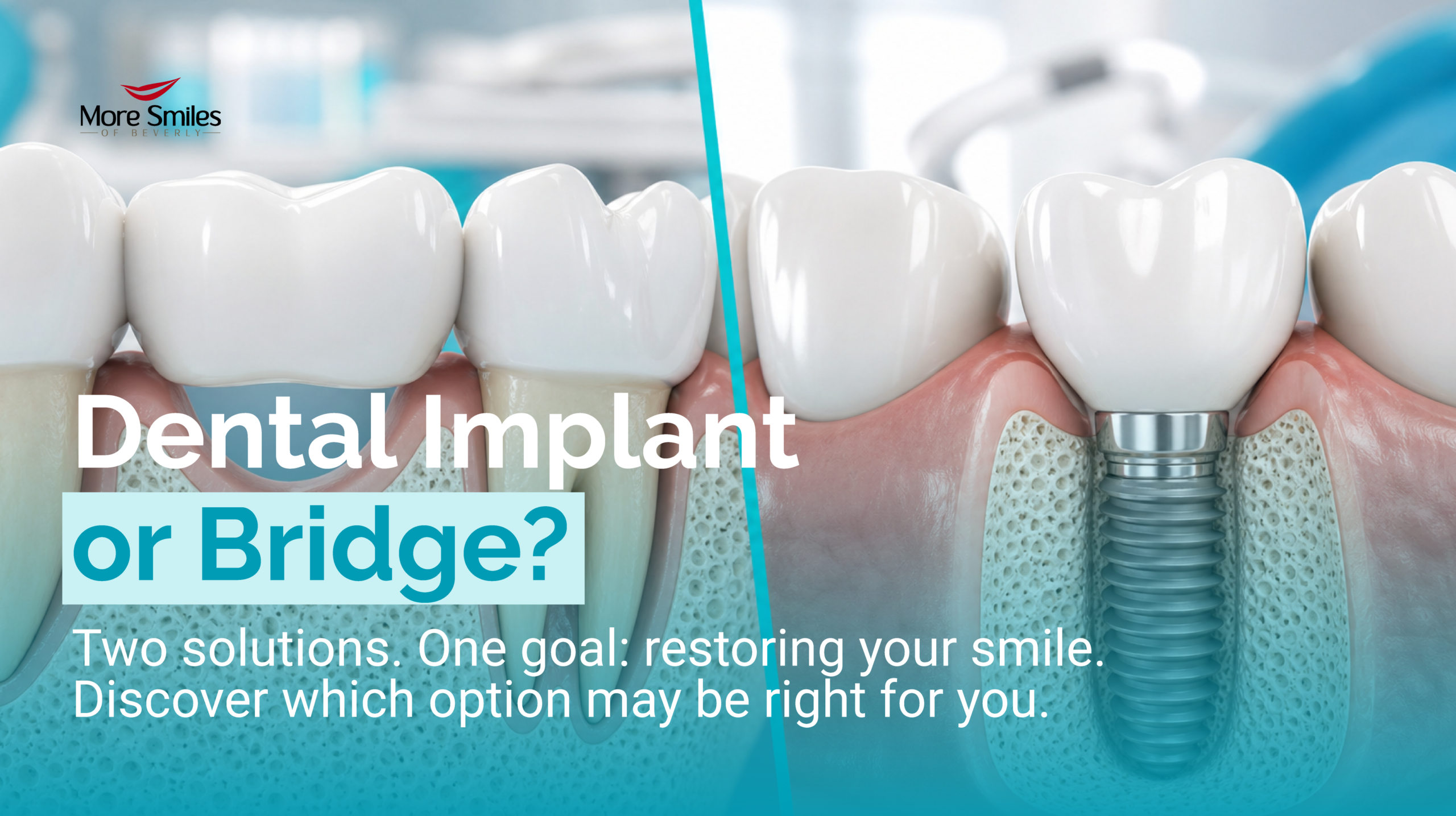
Two common solutions are dental implants and dental bridges. Both can replace a missing tooth, but they accomplish that goal in different ways.
At More Smiles of Beverly, we help patients throughout Beverly and Chicago compare their options and choose a tooth replacement solution based on their oral health, goals, lifestyle, and individual needs.
Why Is Replacing a Missing Tooth Important?
Some people assume that if a missing tooth is not noticeable when they smile, replacing it is unnecessary. However, every tooth plays a role in the way your mouth functions.
Leaving a space untreated may contribute to:
- Shifting of surrounding teeth
- Changes in your bite
- Difficulty chewing certain foods
- Additional stress on remaining teeth
- Changes in the jawbone around the missing tooth
- Cosmetic concerns
Replacing the tooth can help restore both appearance and function while supporting the overall balance of your smile.
Two Ways to Restore the Space
Dental Implant
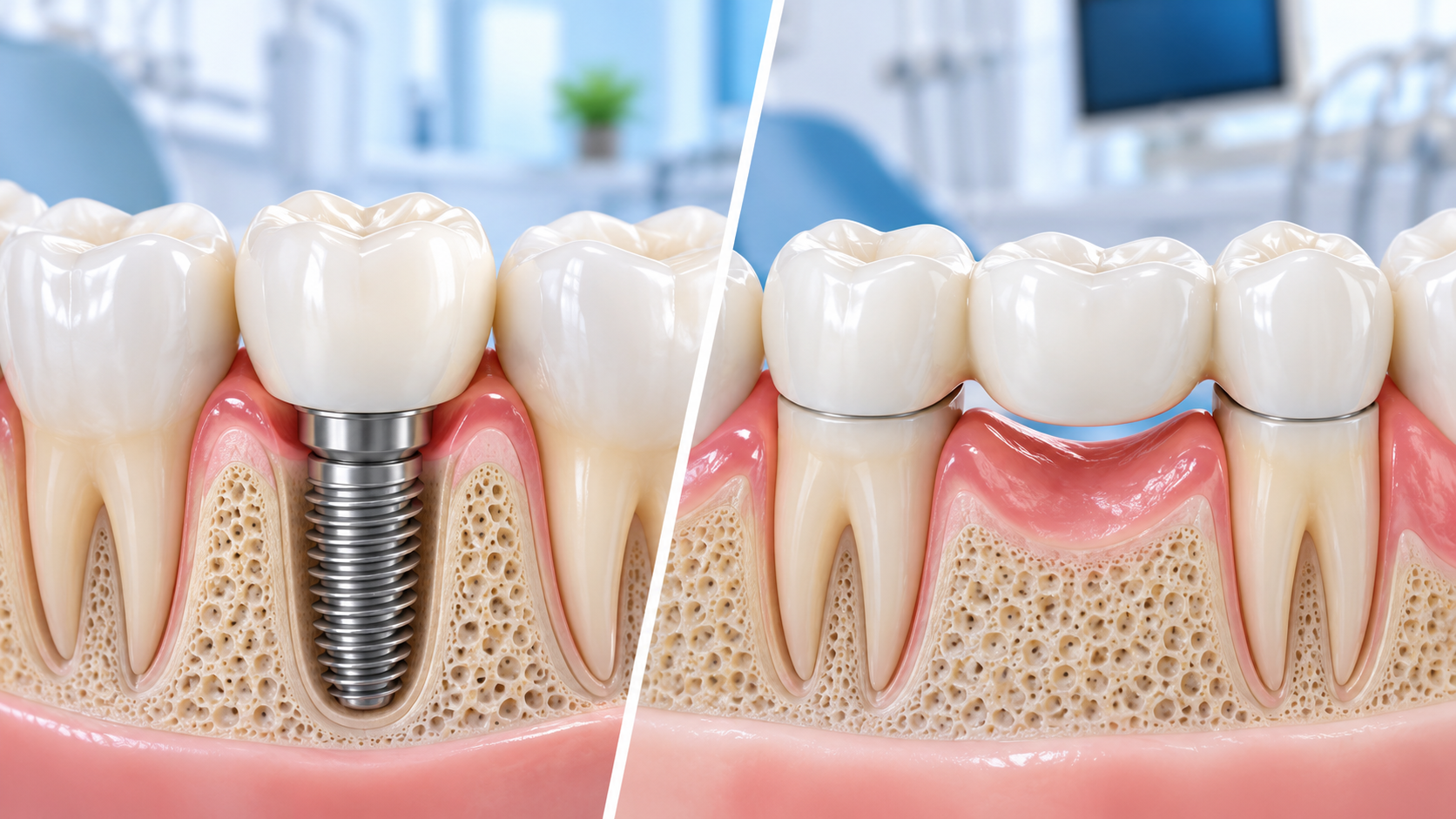
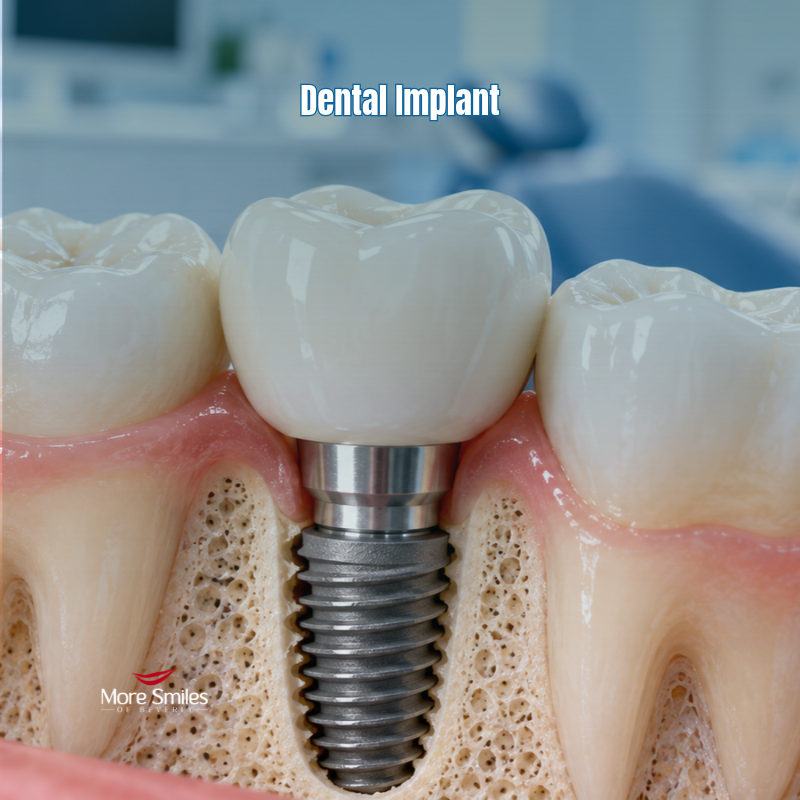
A dental implant replaces the missing tooth from the root upward.
The implant itself is a small post placed into the jawbone. Once the area heals and the implant becomes stable, a custom restoration such as a crown can be attached.
For a single missing tooth, this creates a replacement that functions independently rather than relying on neighboring teeth for support.
Potential advantages:- Replaces the missing tooth root
- Helps stimulate and support the surrounding jawbone
- Does not require neighboring teeth for support
- Can provide strong chewing stability
- Designed to look and function naturally
- Can provide a long-term replacement option with proper care
Dental Bridge
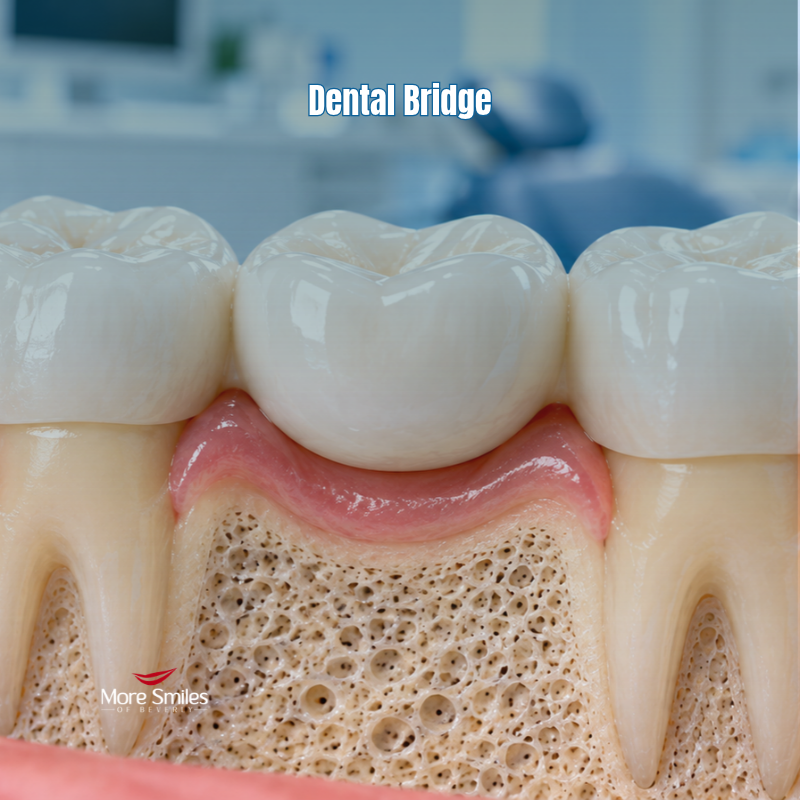
A traditional dental bridge replaces the visible portion of a missing tooth by literally “bridging” the space.
Typically, crowns are placed on the natural teeth on either side of the gap. These supporting teeth hold an artificial replacement tooth between them.
A bridge does not require placement of an implant into the jaw, which makes it a useful option for some patients.
Potential advantages:- Replaces a missing tooth without implant surgery
- Restores the appearance of the smile
- Improves chewing function
- Helps prevent neighboring teeth from shifting
- Provides a fixed restoration
For patients whose neighboring teeth already need crowns, a bridge may sometimes be an especially practical option.
Dental Implant vs. Bridge: What Are the Main Differences?
Although both treatments replace missing teeth, there are important differences to consider.
1. Support
Dental Implant: The implant receives support directly from the jawbone.
Traditional Bridge: The replacement tooth is supported by the natural teeth next to the empty space.
2. Effect on Neighboring Teeth
Dental Implant: Healthy neighboring teeth generally do not need to be reshaped to support a single implant.
Traditional Bridge: The supporting teeth typically need to be prepared so crowns can fit over them.
3. Jawbone
Dental Implant: Because an implant replaces the missing root and interacts with the jawbone, it can help maintain bone in the area.
Traditional Bridge: A bridge replaces the visible tooth but does not replace the missing root.
4. Treatment Process
Dental Implant: Treatment usually involves implant placement followed by a healing period before the final restoration is completed.
Traditional Bridge: A bridge generally does not require implant surgery and may have a shorter overall treatment process.
5. Cleaning and Maintenance
Both options require excellent oral hygiene. Implants are cared for similarly to natural teeth, while bridges require special attention beneath the replacement tooth and around the supporting crowns.
Regular dental visits are important for either restoration.

Which Option Is Better?
There is no single answer that is best for every patient.
Other factors—including gum health, bone levels, bite, medical history, location of the missing tooth, and personal preferences—can also influence the recommendation.
What If I Have Bone Loss?
Bone loss does not automatically rule out dental implants.
Some patients may benefit from bone grafting to rebuild an area before an implant is placed. Other patients may decide that a bridge is more appropriate for their situation.
The key is having the area evaluated rather than assuming only one treatment is available.
What About Cost?
It can be tempting to make a decision based only on the initial treatment cost, but there are other factors worth considering.
When comparing your choices, consider:
- The condition of the neighboring teeth
- Expected maintenance
- Your long-term oral health
- Whether additional procedures are necessary
- The lifespan of the restoration
- Your insurance benefits or financing options
- Your personal priorities
A lower initial price does not automatically make one treatment the better choice, just as a more expensive treatment is not necessarily appropriate for every patient. The best value is the treatment that safely and effectively meets your individual needs.
Replacing One Tooth Can Protect More Than Your Smile
A missing tooth may seem like a small problem, but restoring that space can help improve comfort, function, appearance, and confidence.
At More Smiles of Beverly, patients can explore both dental implants and crowns and bridgework, making it possible to compare options based on their specific situation rather than taking a one-size-fits-all approach.
Whether your tooth was recently lost or you have lived with the gap for years, it is worth finding out what can be done.
Find the Right Tooth Replacement Option for You
Schedule a consultation with More Smiles of Beverly to compare dental implants and dental bridges and discover which option may be the better fit for your smile.
Request ConsultationFrequently Asked Questions
Is a dental implant better than a bridge?
Not necessarily. Both can be excellent tooth replacement options. The better choice depends on factors such as bone health, neighboring teeth, treatment goals, and your overall oral health.
Does a dental bridge feel like a real tooth?
A properly designed bridge is fixed in place and is intended to restore comfortable function and a natural appearance. It may require a slightly different cleaning routine than natural teeth.
Does getting a dental implant affect the teeth next to it?
A single dental implant generally does not require the neighboring teeth to be reshaped for support, which is one of its major differences from a traditional bridge.
Can I get a dental implant if my tooth has been missing for years?
Potentially. Your dentist will need to evaluate the amount of bone remaining in the area. If bone loss has occurred, additional treatment such as bone grafting may sometimes be recommended.
What happens if I do not replace a missing tooth?
The effects vary from person to person, but neighboring teeth can shift, bite changes can occur, and bone in the missing tooth area may gradually decrease. A dentist can help you determine whether replacement is recommended.
Ready to Restore Your Smile?
Let the team at More Smiles of Beverly help you understand your options and choose a solution designed around your smile.
Book Your Visit