
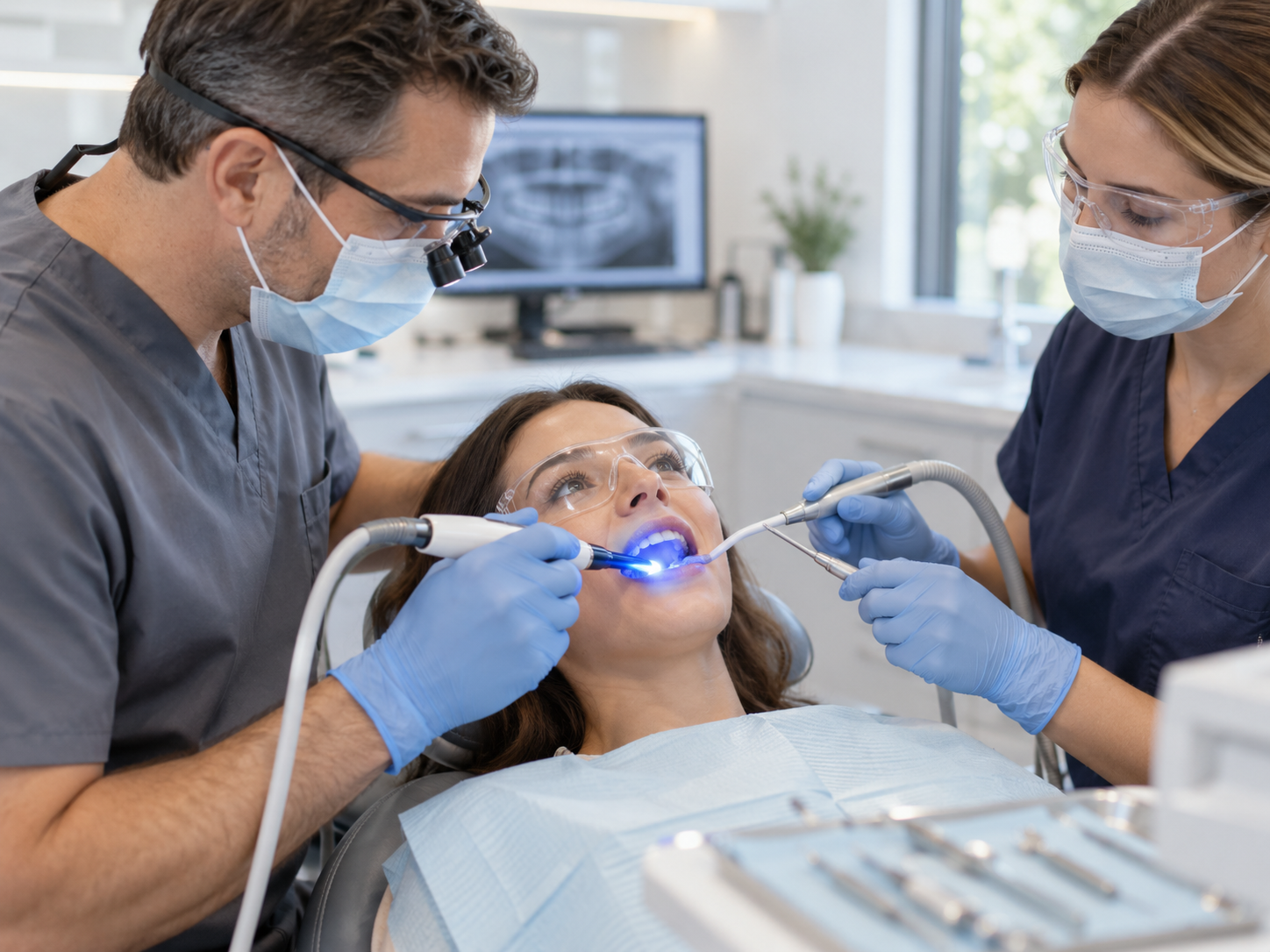
Dental Fillings in Beverly, Chicago
A cavity is a small hole in your tooth caused by decay, and it does not heal on its own. A dental filling removes the damaged part of the tooth and seals the space with a strong, natural-looking material, so you can chew comfortably again and keep the decay from reaching the nerve.
At More Smiles of Beverly, Dr. Ademola Adekola Jr. treats cavities early and conservatively, saving as much of your natural tooth as possible. Most fillings are completed in a single, comfortable visit at our office on West 104th Street.
A Small Repair That Protects the Whole Tooth
Treating a cavity while it is small keeps the fix simple. Waiting lets bacteria move deeper, which can turn a quick filling into a crown or root canal.
Comfortable Treatment
The area is fully numbed first, so most patients feel only light pressure or vibration.
Natural-Looking Results
Tooth-colored materials are shaded to blend in, so your smile looks just like it did before.
Usually One Visit
Most fillings are placed, shaped and polished in a single appointment.
Stops Decay in Its Tracks
Sealing the cavity keeps bacteria out and protects the nerve inside the tooth.
Signs You May Need a Filling
Cavities often start without pain, which is why regular exams matter. As decay grows, you may notice:
- Sensitivity to cold drinks, hot foods or sweets
- A sharp twinge when you bite down on one tooth
- A dark spot or visible hole on the tooth surface
- Food catching in the same spot again and again
- A rough or chipped edge you can feel with your tongue
- An old filling that is cracked, worn or loose
Good to know: very early decay, seen as chalky white spots, can sometimes be reversed with fluoride and better home care. Once a true hole forms in the enamel, only a filling can repair it.
How a Filling Is Placed, Step by Step
No surprises. Here is exactly what happens in the chair, from the first look to the final polish.
Exam and X-Rays
We check the tooth and take digital X-rays to see how deep the decay goes.
Numbing
A numbing gel goes on first, then local anesthetic, so the tooth is fully comfortable.
Removing Decay
The damaged part of the tooth is gently cleaned away, keeping healthy structure intact.
Filling and Curing
The material is placed in thin layers, and each layer is hardened with a special blue light.
Bite Check and Polish
We check your bite, adjust any high spots and polish the tooth smooth.
Small Cavities Are Simple to Fix. Waiting Is What Makes Them Complicated.
Healthy smiles for every member of the family, close to home in Beverly.
Book an AppointmentWhich Type of Filling Is Right for You?
The best material depends on where the tooth is, how large the cavity is and how much chewing pressure it takes. Dr. Adekola will walk you through the options that fit your tooth.
Composite
- LookTooth-colored
- Best forFront and back teeth
- Tooth savedBonds directly, less drilling
- Typical life5 to 10+ years
Amalgam (Silver)
- LookSilver-gray
- Best forHeavy-chewing molars
- Tooth savedNeeds more shaping
- Typical life10 to 15+ years
Ceramic
- LookTooth-colored, stain resistant
- Best forLarger repairs
- Tooth savedCustom-made fit
- Typical life10 to 15+ years
Glass Ionomer
- LookTooth-colored
- Best forNear the gumline, low-bite areas
- BonusReleases fluoride
- Typical lifeAround 5 years

Caring for Your New Filling
Recovery is quick. Most people go right back to work or school the same day. A few simple habits help your filling last:
Wait out the numbness
Your lip and tongue stay numb for a few hours. Skip chewing until feeling returns.
Expect mild sensitivity
Some sensitivity to hot, cold or pressure is normal for a few days to a couple of weeks.
Call if your bite feels high
If the tooth hits first when you close, a quick adjustment fixes it.
Keep up your checkups
Regular exams catch wear or new decay around the edges early.

Dr. Ademola J. Adekola Jr., DDS
A graduate of the University of Illinois at Chicago College of Dentistry, Dr. Adekola focuses on conservative, long-lasting restorations and patient comfort.
Dental Fillings FAQ
Does getting a filling hurt?
For most patients, no. We apply a numbing gel before a local anesthetic, so you may feel only a brief pinch. During the filling you might notice pressure or vibration, but not pain. Mild sensitivity for a few days afterward is normal.
How long do dental fillings last?
It depends on the material and your habits. Composite fillings typically last 5 to 10 years or more, while amalgam and ceramic often last 10 to 15 years or longer. Good brushing, flossing and regular checkups help any filling last longer, while teeth grinding shortens its life.
Can a cavity go away without a filling?
Only at the very earliest stage. Chalky white spots of weakened enamel can sometimes be remineralized with fluoride and good home care. Once decay breaks through the enamel and forms a hole, the tooth cannot repair itself and a filling is needed to stop it from growing.
Are tooth-colored fillings better than silver fillings?
Tooth-colored composite fillings blend in with your smile, contain no mercury and bond directly to the tooth, which means less healthy tooth needs to be removed. Silver amalgam is very durable on back molars. Dr. Adekola will recommend the material that best fits the size and location of your cavity.
Should I replace my old silver fillings?
Not always. Healthy, intact amalgam fillings usually do not need to be removed, since drilling them out also removes healthy tooth structure. Replacement makes sense when a filling is cracked, leaking, has new decay underneath or when you prefer a tooth-colored look. We will check them at your exam.
Can a cavity come back after a filling?
Yes. Over time a filling can wear or pull away slightly, letting bacteria slip underneath. This is called recurrent decay. Daily brushing and flossing plus regular exams let us catch it early, often before you feel anything.
How much does a filling cost?
Every treatment plan is quoted after an exam, because the cost depends on the size of the cavity, the tooth involved and the material chosen. Our team will review your options and your insurance with you before any work begins. Contact us for a quote.
Dental Fillings Near You in the Southwest Side and Suburbs
Our office at 2407 W 104th St sits in the heart of Beverly, an easy drive for families across Chicago's Southwest Side and the nearby south suburbs.
Have a Sensitive Tooth? Let's Take a Look.
Mon to Fri, 9:00 a.m. to 4:30 p.m. at 2407 W 104th St, Chicago, IL 60655