

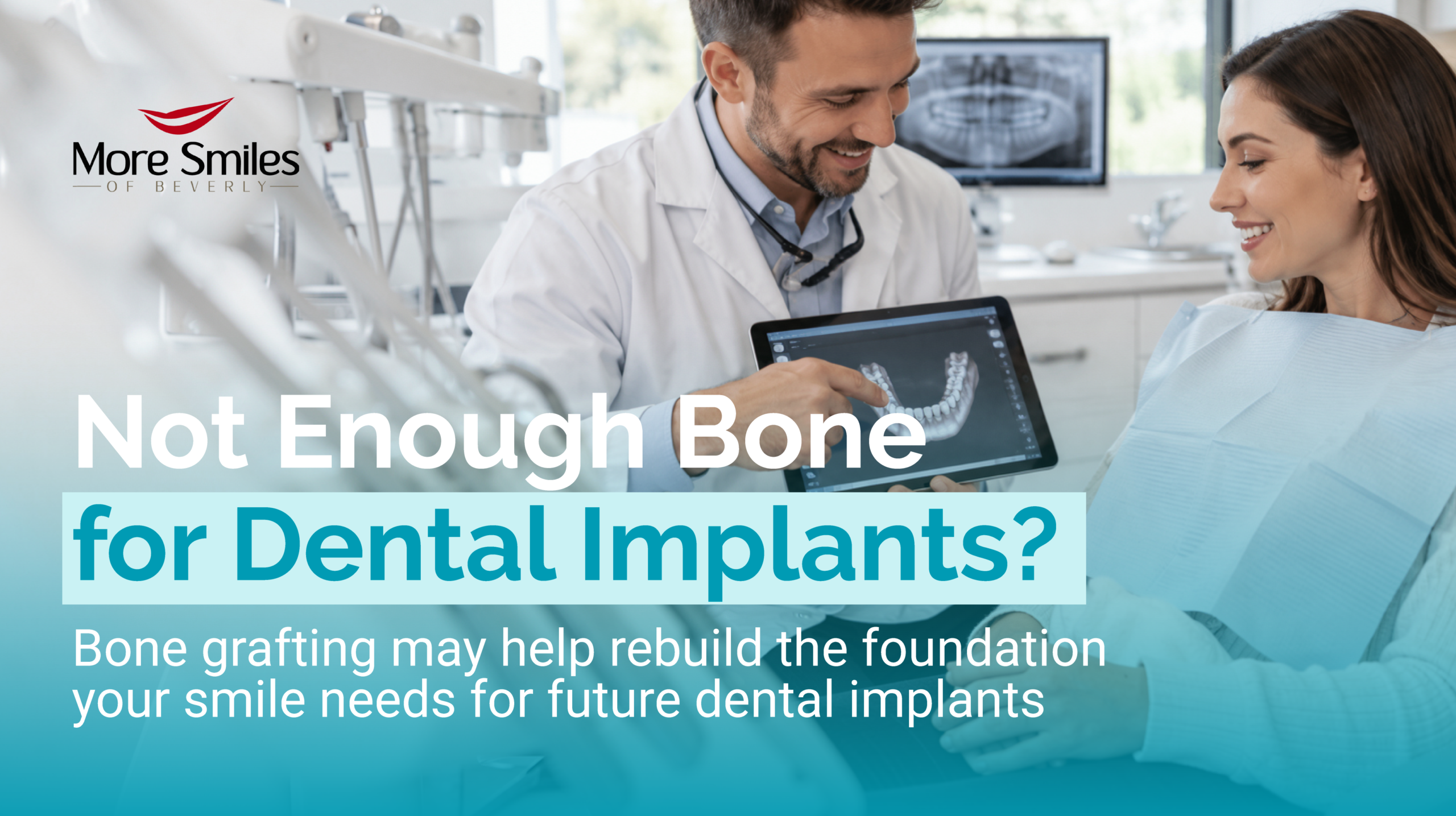
“Not Enough Bone” for Dental Implants? How Bone Grafting Can Help Rebuild Your Smile
Bone loss doesn’t always mean dental implants are out of reach. Bone grafting may help create the foundation needed for a stronger, more stable smile.
If you’ve been considering dental implants but have been told you don’t have enough bone to support them, the news can feel discouraging. However, jawbone loss does not automatically mean you cannot receive dental implants.
For some patients, bone grafting can help rebuild areas where bone has weakened or decreased, creating a healthier foundation for future implant placement.
At More Smiles of Beverly, we help patients in Beverly, Chicago, and surrounding communities understand their tooth replacement options and determine the appropriate path based on their individual oral health.
Why Is Bone Important for Dental Implants?
A dental implant is placed into the jawbone, where it serves as a strong foundation for a replacement tooth.
Because the implant depends on the surrounding bone for support, the jaw needs adequate bone volume and density for successful placement.
When enough healthy bone is available, the implant can integrate with the jaw as the area heals. When significant bone loss has occurred, additional preparation may be recommended before an implant is placed.
Why Does Jawbone Loss Happen?
Jawbone loss can occur for several reasons, and many patients may not realize it is happening.
One important reason bone loss can occur after losing a tooth is the lack of stimulation that the tooth root once provided. When a natural tooth is present, everyday biting and chewing help stimulate the surrounding bone. After a tooth is lost, that stimulation decreases, and the bone in the area may gradually change.
What Is Dental Bone Grafting?
Bone grafting is a procedure used to add or rebuild bone in an area where additional support is needed.
The goal is to help create a stronger foundation that may later support a dental implant or another restorative treatment.
Depending on your needs, grafting material is placed in the area where bone needs to be strengthened. Over time, the area heals as new bone develops around the graft.
Your treatment is personalized based on:
- How much bone has been lost
- Where the missing tooth is located
- How long the tooth has been missing
- The condition of the gums
- The number of implants being considered
- Your overall oral health
A dental examination and imaging are necessary to determine whether bone grafting is appropriate.
When Might You Need a Bone Graft Before an Implant?
Not every dental implant patient needs bone grafting. You may be more likely to need it if:
- Your tooth has been missing for an extended period
- You have experienced significant jawbone loss
- Gum disease has affected the supporting bone
- A previous infection damaged the area
- The jawbone is too thin or shallow for implant placement
- A tooth extraction left an area that needs additional support
Can a Bone Graft and Dental Implant Be Done at the Same Time?
Sometimes.
For patients with only minor bone loss, a dentist may be able to perform bone grafting at the same time as implant placement.
If more extensive rebuilding is needed, the graft may need time to heal before the implant can be placed.
Your treatment timeline will depend on your specific needs, which is why a personalized evaluation is so important.

What Happens After Bone Grafting?
Healing after bone grafting is an important part of the process.
While the initial surgical area may begin feeling better relatively quickly, the bone itself requires time to develop and strengthen.
During healing, your dental team may recommend that you:
- Keep the area clean according to your post-treatment instructions
- Avoid disturbing the surgical site
- Follow dietary recommendations while healing
- Attend scheduled follow-up appointments
- Avoid smoking or other habits that may interfere with healing
- Contact the dental office if you notice unusual or worsening symptoms
Once the area has healed sufficiently, the next stage of implant treatment can be evaluated.
Why Consider Rebuilding the Bone?
Preparing the jaw properly before implant placement can be an important part of creating a stable restoration.
Strengthen areas affected by bone loss.
Create sufficient support for future implant placement.
Open treatment possibilities that may not have existed before.
Bone grafting may also help improve the foundation for future tooth replacement and preserve or rebuild the shape of the jaw.
The goal is always to create a treatment plan based on the health and structure of your mouth rather than rushing into implant placement.
Think You Don’t Have Enough Bone?
Being told you have experienced bone loss does not necessarily mean you have to give up on the idea of dental implants.
Modern restorative dentistry provides options for rebuilding areas of the jaw and preparing them for future tooth replacement.
At More Smiles of Beverly, we evaluate each patient individually to determine whether dental implants, bone grafting, or another tooth replacement solution may be appropriate.
Ready to Explore Your Options?
If you are missing teeth or have previously been told you are not a candidate for implants because of bone loss, a consultation can help you better understand what options may now be available.
Request a ConsultationFrequently Asked Questions
Does everyone need a bone graft before getting dental implants?
No. Many patients have enough healthy bone for implant placement without grafting. A dental evaluation and imaging can determine whether additional bone support is needed.
How long do I need to wait after a bone graft before getting an implant?
Healing times vary depending on the location and amount of grafting performed. Your dentist will monitor the area and determine when it is ready for the next stage of treatment.
Can I still get dental implants if I have had missing teeth for years?
Possibly. Having a tooth missing for many years can contribute to bone loss, but bone grafting or other treatment options may help. An evaluation is the best way to determine your candidacy.
Is bone grafting only used for dental implants?
No. Bone grafting may be recommended for several reasons, including preserving or rebuilding bone after tooth loss or extraction.
How do I know if I have jawbone loss?
Bone loss is not always visible or noticeable on your own. Dental imaging and an examination can help your dentist evaluate the amount and quality of bone in the area.